- Al Quoz Industrial 3, Dubai
- Sat–Thu · 8 AM – 9 PM

Expert Jeep Brake Pad Replacement in Dubai
Free estimate · No obligation
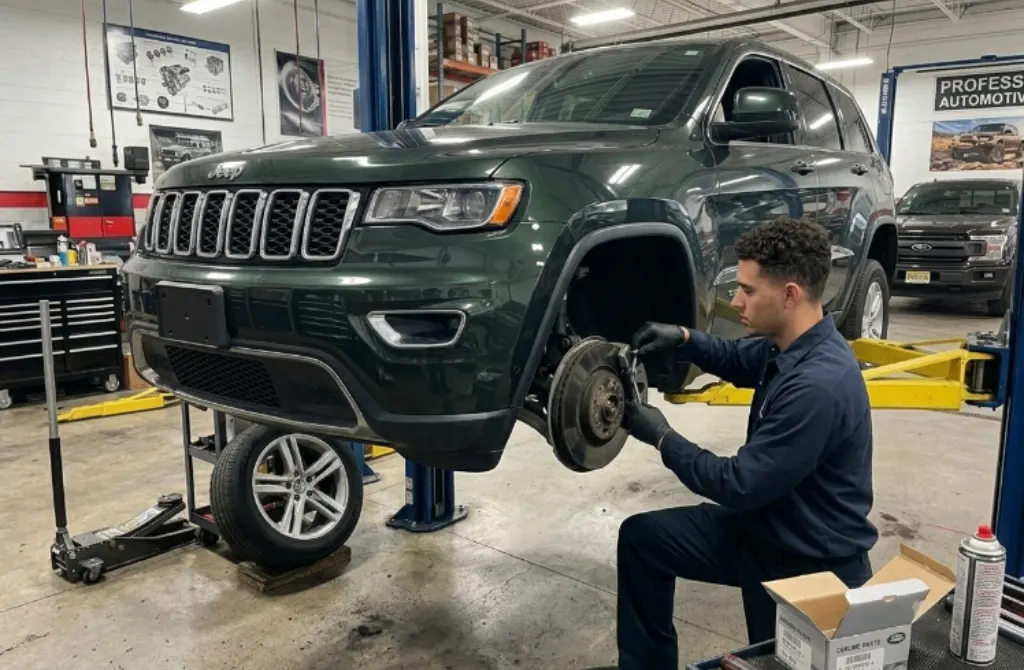
Why Is Jeep Brake Pad Replacement Important in the UAE?
Driving a Jeep in the UAE often means switching between paved roads and loose sand. This puts specific stress on your brakes that regular mechanics might overlook. Professional maintenance ensures your braking power is consistent, whether you are towing gear, climbing a dune, or navigating stop-and-go traffic in 40°C heat.
Key safety and maintenance facts:
- Hill Descent Control (HDC) Sync: We calibrate your braking force to work with your Jeep’s HDC system, improving your control on steep descents by up to 15%.
- Rotor Life Preservation: Our high-conductivity sensors alert your dashboard at exactly 3mm of pad life, protecting 95% of rotors from deep, costly scoring.
- Thermal Management: Deep-cleaning your rotor cooling vents increases airflow efficiency by 12%, preventing brake fade during long drives in desert heat.
- Towing/Load Optimization: We use high-density friction compounds that improve stopping distance under heavy loads (like when towing or carrying gear) by 20%.
- Caliper Grit Protection: Our cleaning process removes packed-in desert sand, reducing the risk of stuck caliper pistons by 40%.
- Fluid Thermal Stability: We use a high-boiling-point synthetic fluid that reduces "spongy" pedal feel in extreme temperatures by 25%.
Comprehensive Jeep Brake Repair and Maintenance Services
We look at your Jeep’s braking system as a complete unit, focusing on mechanical strength and electronic precision.
Technical Compliance and Fluid Standards
We use synthetic brake fluids with superior heat resistance. This prevents the fluid from boiling during off-road climbs or heavy braking, keeping your pedal feel firm.
Brake Pad and Rotor Maintenance
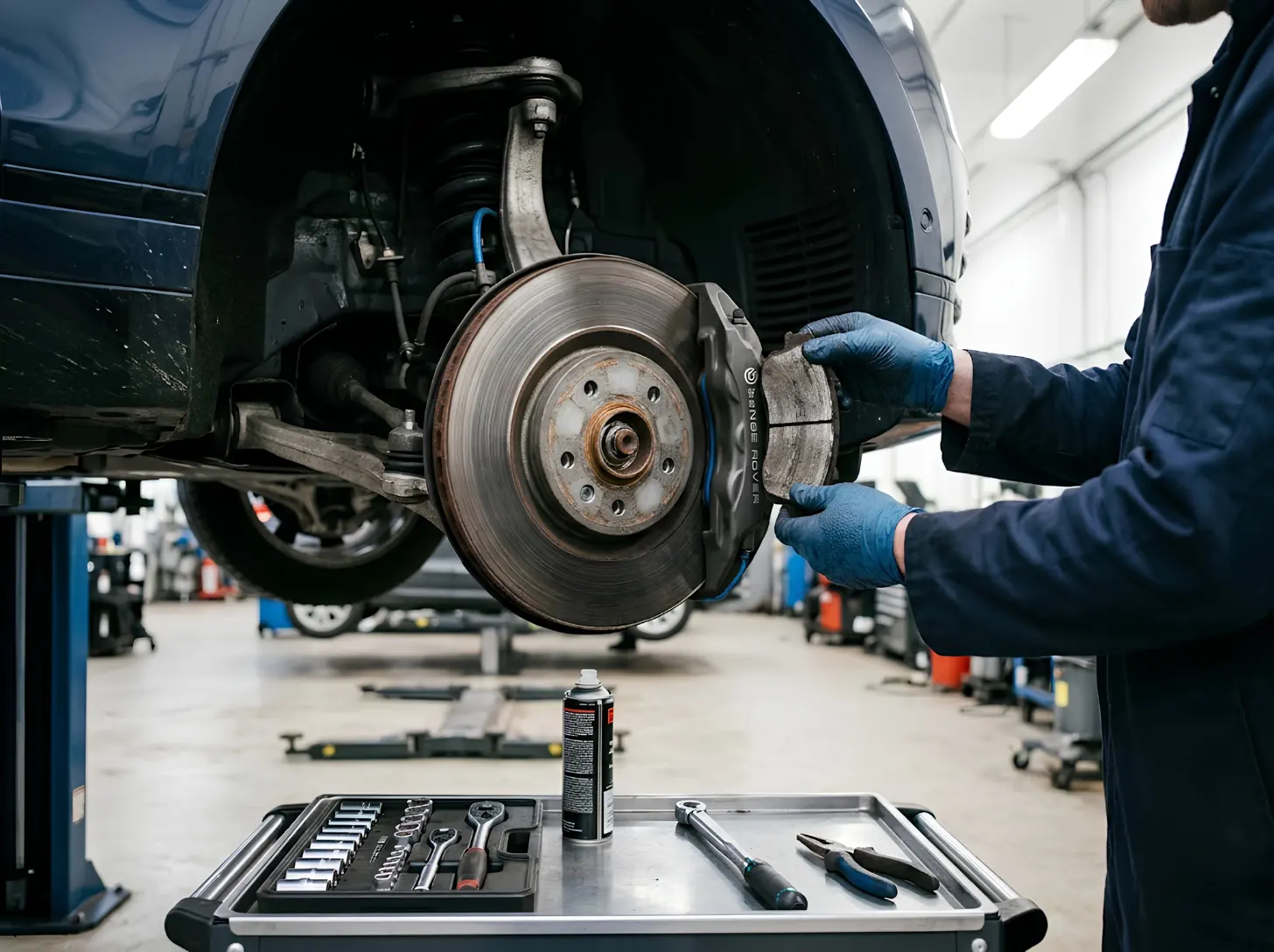
We check your rotors with precision tools. If they are within the safety limits, we resurface them to create a perfect, flat match for your new brake pads, ensuring optimal bite.
Caliper and Hardware Restoration
We perform a deep-clean on your calipers to remove grit and old brake dust. This prevents your pads from sticking and ensures pressure is distributed evenly across every wheel.
Electronic Sensor Calibration
We reset your Jeep’s onboard computer after every pad replacement. This clears old service warnings and ensures the car accurately monitors your new components.
Professional Brake Fluid Flush
Old fluid absorbs moisture, which can cause internal rust. We perform a full system flush to remove contaminated fluid, keeping your hydraulic lines clean and responsive.
Electronic Parking Brake (EPB) Maintenance
For Jeeps equipped with electric parking brakes, we use diagnostic software to safely engage "service mode." This protects the motor from electrical damage and ensures a quiet release.
Our Proven Jeep Brake Replacement Workflow
We follow a strict, reliable process so your Jeep stays ready for any road or trail.
Diagnostic Assessment & Disassembly
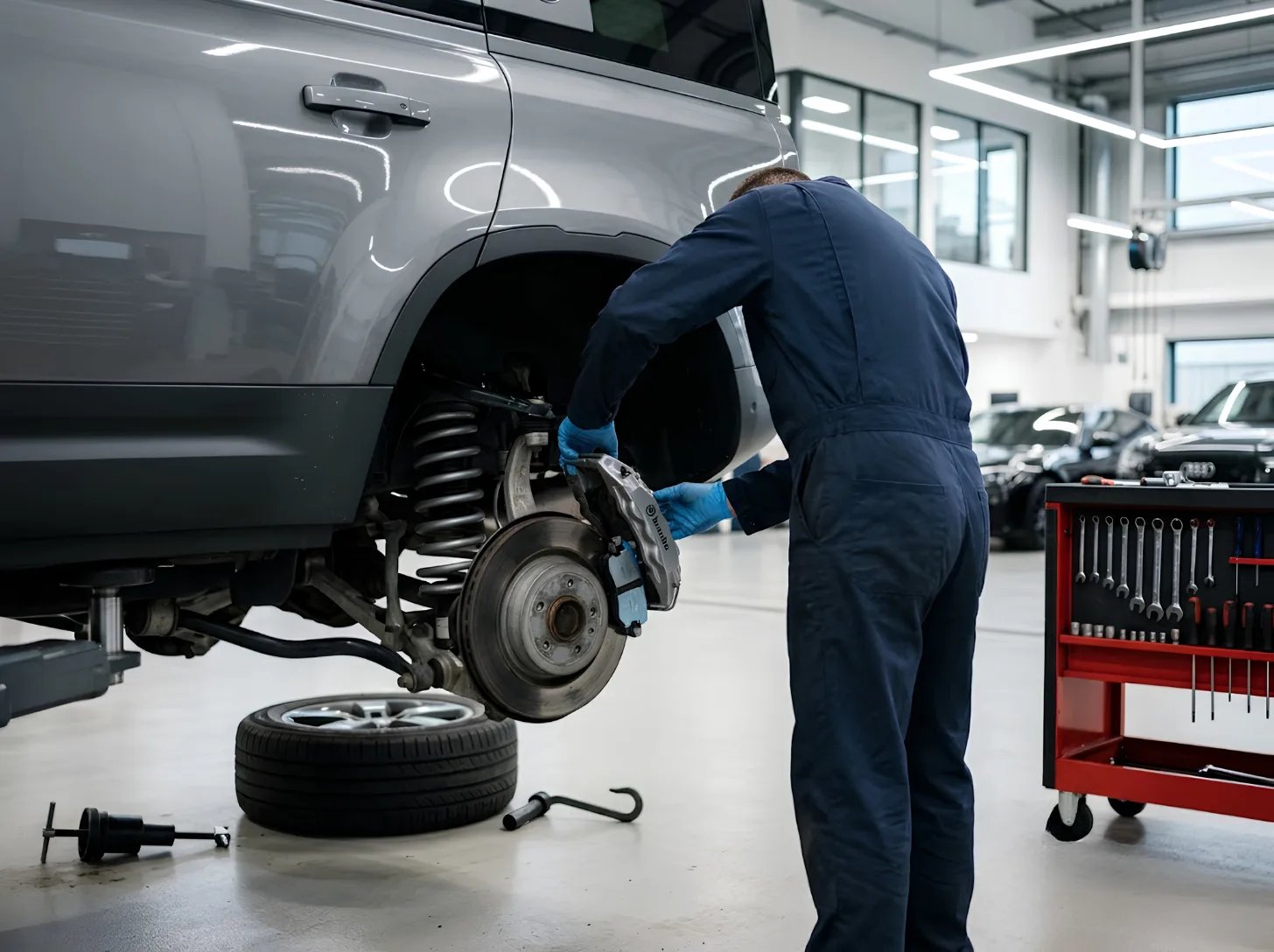
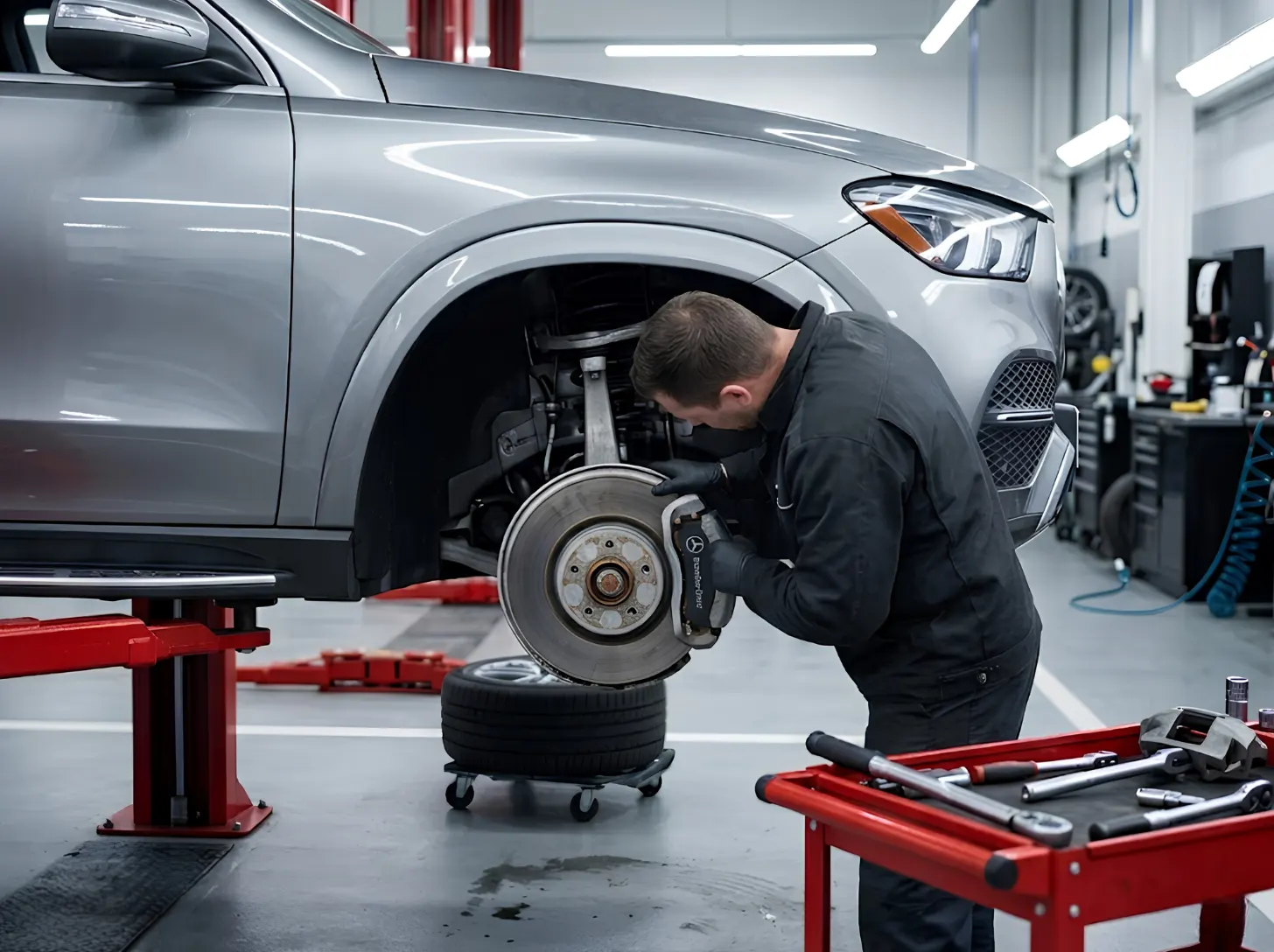
We check your brake pedal travel and scan for system error logs. We then remove your wheels, keeping your sensitive off-road suspension protected while we work.
Surface Preparation & Machining
We scrub the wheel hubs to clear away rust and debris that can cause vibration. If rotors are healthy, we machine them to create an ideal base for new pad material.
Precision Installation & Bedding
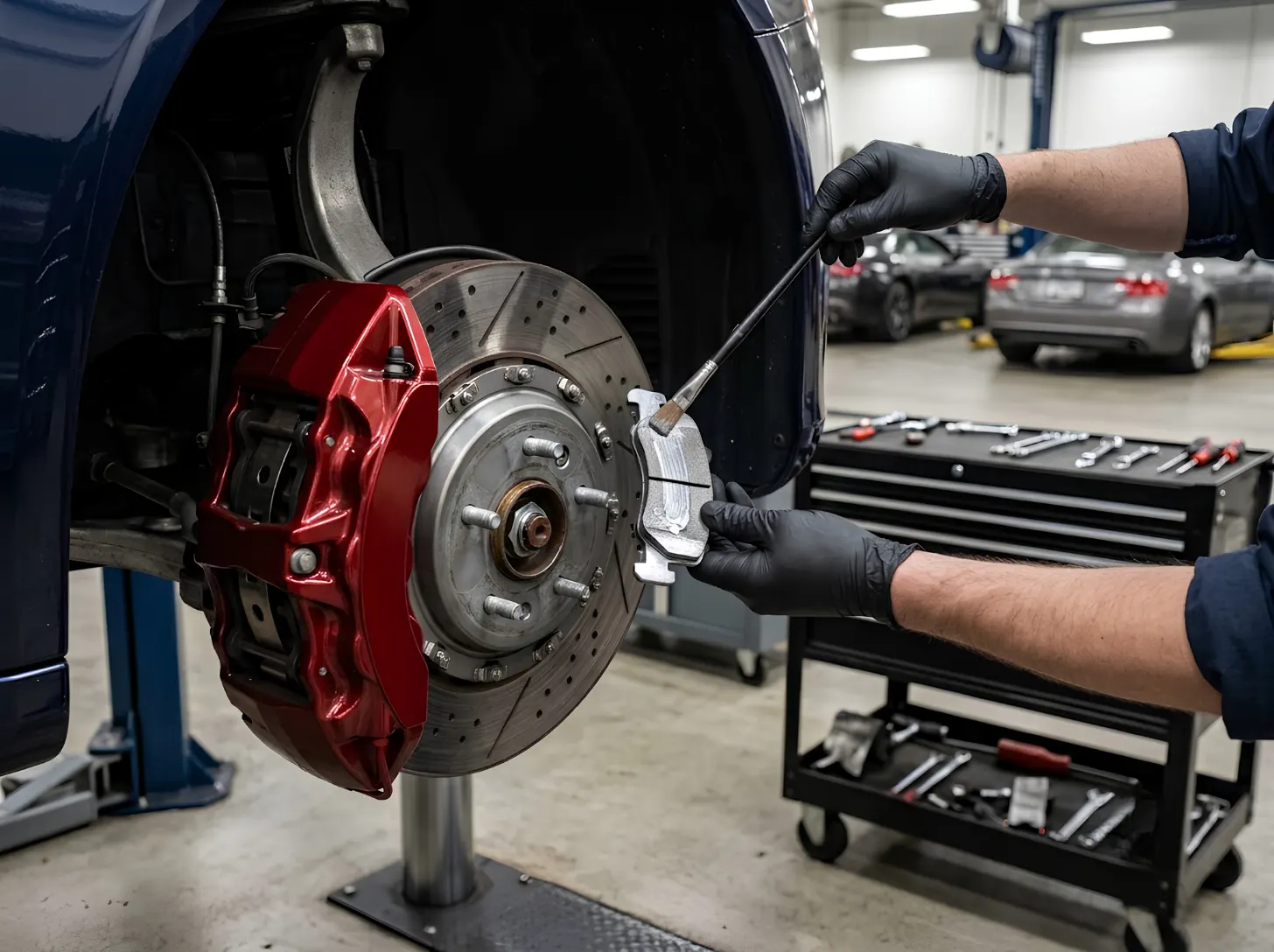
We apply high-temperature lubricant to every sliding point. After fitting the pads, we perform a controlled drive to "bed" the material, ensuring the brakes grab firmly.
Final Safety & Performance Verification
We take your vehicle on a final test drive. We verify the braking balance and ensure the onboard computer recognizes the new pads correctly.
Why Choose Our Jeep Brake Repair Service?
We provide specialized care for your Jeep, ensuring it receives the exact level of precision it was designed for.
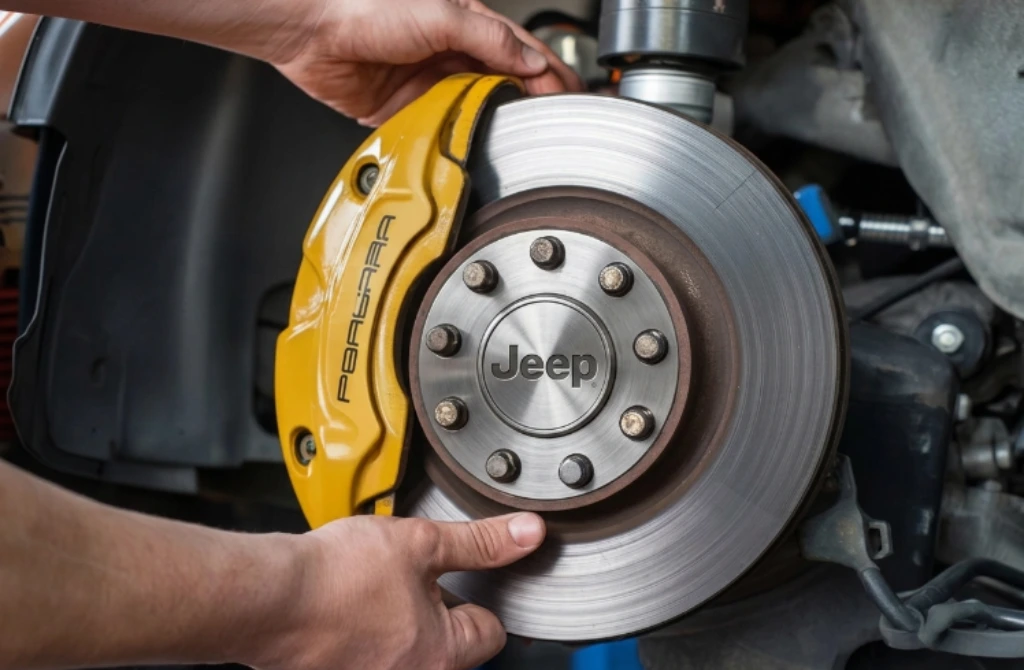
Expert Technical Certification
Our technicians are trained on Jeep’s specific braking architectures. We understand the unique requirements of the other models, including 4×4-specific braking behaviors.
Advanced Diagnostic Technology
We use Jeep-compatible scanners to talk to your ABS and traction control modules. This allows us to fix root causes rather than just replacing parts, ensuring your systems are fully synced.
Fair and Transparent Pricing
We believe in honesty. We show you the wear patterns on your old parts so you understand why a service is required before we touch a single bolt.
Premium Quality Parts
We use friction materials that match the original factory specifications for hardness and heat resistance, maintaining the stopping power your heavy-duty Jeep chassis needs.
Time-Efficient Service
We maintain a large stock of common Jeep-specific parts. This allows us to complete your brake service faster, getting you back to your commute or your next adventure sooner.
Comprehensive Service Warranty
We back our parts and labor with a solid warranty, giving you peace of mind that your brakes will stay reliable on and off the road.
Brands We Serve












What Client Say After Service
Restore Your Jeep’s Stopping Confidence Today
Your Jeep is a powerful machine that deserves the best care to keep you safe on any terrain. Do not ignore the warning signs of worn brakes; whether it is a squeal on the road or a "soft" feel during your daily drive, your safety depends on them. From deep-cleaning sand-clogged sensors to expert rotor machining, our technicians have the skills to handle your Jeep with total precision. Contact us today to book your brake inspection and get back the confidence you felt the day you bought your Jeep.
Frequently Asked Questions
How does sand driving affect my Jeep's brakes?
Sand and grit are very abrasive. They can get stuck in your brake assembly, causing noise and extra wear. We recommend a cleaning after any heavy desert trip.
Can I use generic brake pads for my Jeep?
We advise against it. Jeeps are heavier and often used for towing; generic pads may lack the heat resistance needed to stop your vehicle safely under heavy loads.
Why does my brake pedal feel "different" after I install larger tires?
Larger, heavier tires increase the rotational mass. This makes your brakes work harder, which can change your pedal “feel.” We can recommend upgrades if you find this affects your safety.
Is the "squeal" normal on my Jeep?
A light, short squeak as you back out of your driveway can be surface rust. But if it happens while driving or when you stop, your pads are likely low and need a check.
Why is my Jeep's brake fluid turning dark?
Brake fluid absorbs moisture. In Dubai’s heat, this can cause the fluid to break down. A flush keeps your system clean and prevents internal corrosion.
How do I know if my rotors are warped?
If you feel a vibration or “pulsing” in your steering wheel or brake pedal when stopping from high speeds, your rotors are likely uneven and need to be machined or replaced.
Does the Jeep's 4x4 system use the brakes?
Yes, many Jeep systems use the brakes to control wheel spin (Traction Control). This means your brakes do double duty, helping both to stop the car and to keep you moving on loose ground.
Can a "Low Brake Fluid" light turn on without a leak?
Yes. As your brake pads wear down, the fluid level in the reservoir naturally drops. This often triggers the dashboard light even if your system is perfectly sealed.
Should I machine my rotors?
If they have enough thickness, machining is a great way to save money. It removes imperfections and ensures your new pads sit perfectly flat for a smooth stop.
Why does my Electronic Parking Brake (EPB) act up?
Often, it just needs a digital reset or a sensor clean. Our diagnostic tools can quickly tell us if it is a simple software fix or if the motor needs attention.