- Al Quoz Industrial 3, Dubai
- Sat–Thu · 8 AM – 9 PM

Professional Land Rover Brake Pad Replacement in Dubai
Free estimate · No obligation
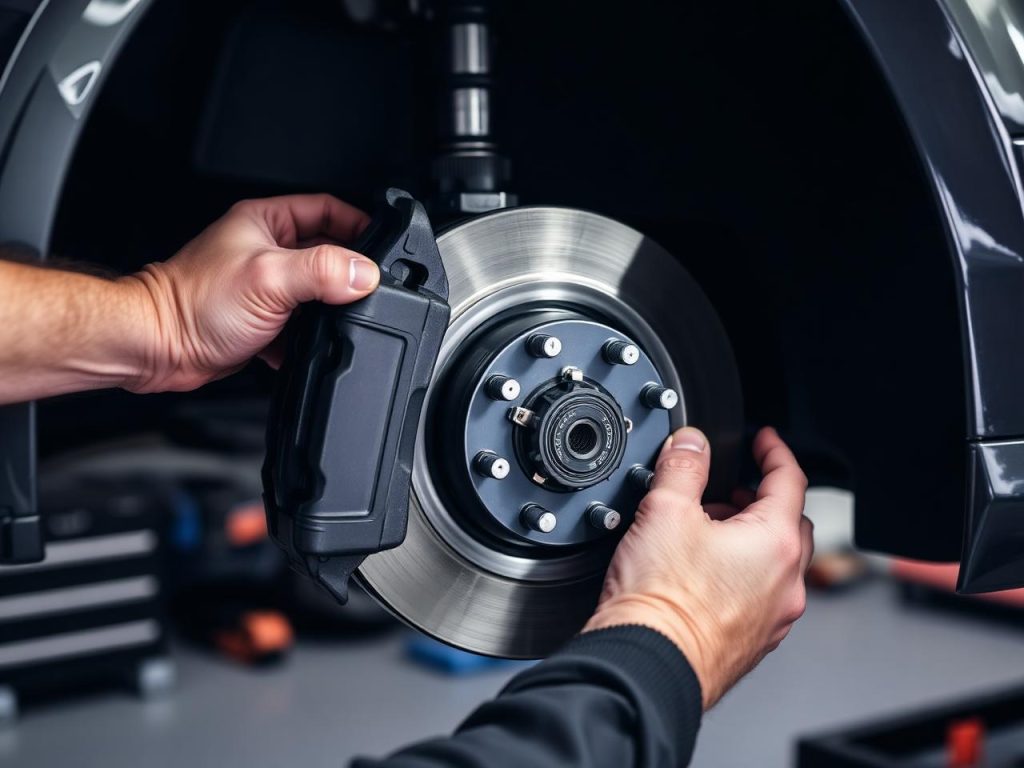
Why is Expert Land Rover Brake Pad Replacement Essential in the UAE?
A Land Rover is designed to handle extreme challenges, but Dubai’s unique climate makes brake care a priority. The combination of intense summer heat, fine wind-blown sand, and heavy stop-start driving creates a “perfect storm” for brake wear.
Key safety and maintenance facts:
- Supports Terrain Response: We calibrate your braking logic to sync with your SUV's off-road computers, ensuring precise traction control when you drive on loose sand.
- Handles Heavy Chassis weight: We install high-density friction pads designed to stop your large SUV quickly, reducing the strain on your pedal during emergency stops.
- Prevents Heat Build-up: We remove packed grit from your rotor vents, helping your brakes dissipate heat 15% faster to avoid "spongy" performance on hot asphalt.
- Syncs Parking Brake Motor: We use factory-grade diagnostic tools to reset your electronic parking brake system, ensuring it never jams or locks up unexpectedly.
- Optimizes Towing Stability: Our premium pads are engineered to maintain a firm grip under high-load conditions, stopping your system from fading while towing heavy cargo.
- Stops "Nose-Dive" Effects: We ensure your front and rear brake force is perfectly balanced, keeping your SUV level and comfortable when you slow down.
Comprehensive Land Rover Brake Repair and Maintenance Services
We look at your braking system as one integrated machine, ensuring every sensor and mechanical part functions exactly as the engineers intended.
Technical Compliance and Fluid Standards
We use synthetic brake fluids with extremely high boiling points. This prevents the liquid from turning into vapor in the Dubai heat, keeping your pedal feel firm and consistent.
Brake Pad and Rotor Maintenance
We assess the health of your rotors using precision laser tools. If they are within the safety tolerance, we machine the surfaces to create a perfect interface for your brand-new pads.
Caliper and Hardware Restoration
We perform a deep-clean of your brake calipers, removing stubborn desert grime and old, hardened grease. This prevents the pistons from sticking and ensures even pressure on every pad.
Electronic Sensor Calibration
We program the new wear sensors into your Land Rover’s central computer. This ensures your dashboard accurately shows the life left in your pads, eliminating false warning messages.
Professional Brake Fluid Flush
Over time, fluid absorbs humidity from the air. We perform a complete hydraulic flush to remove contaminated liquid and replace it with fresh, high-performance fluid.
Electronic Parking Brake (EPB) Maintenance
We use specialized software to put your parking brake into "service mode." This protects the sensitive electric motors from damage and ensures a smooth, quiet release every time you drive.
Our Proven Land Rover Brake Replacement Workflow
We follow a strict, reliable process to ensure your Land Rover leaves our shop ready for any road or trail.
Diagnostic Assessment & Disassembly
We begin with a thorough check of your pedal travel and pull system error logs. We then remove your wheels, keeping the sensitive air suspension and electrical lines protected throughout the job.
Surface Preparation & Machining
We scrub your wheel hubs to clear away rust and debris that can cause vibration. If the rotors are still thick enough, we resurface them to create a flat, ideal base for new pad material.
Precision Installation & Bedding
We apply high-temperature lubricant to every sliding point. After fitting the pads, we perform a controlled driving cycle to "bed" the material, ensuring the brakes grab firmly from the very first drive.
Final Safety & Performance Verification
We take your vehicle on a final test drive. We verify the braking balance, check for any strange noises, and ensure the onboard computer sees the new pads correctly.
Why Choose Our Land Rover Brake Repair Service?
We specialize in the Land Rover brand, giving you peace of mind that your vehicle is being handled by people who understand its specific needs.
Expert Technical Certification
Our technicians undergo constant training on Land Rover systems. We know the specific braking behaviors of every model, from the Defender to the Discovery.
Advanced Diagnostic Technology
We plug into your vehicle’s electronic brain using factory-level tools. This allows us to talk to your stability control and ABS modules to fix root causes, not just symptoms.
Fair and Transparent Pricing
We believe in total honesty. We show you the wear patterns on your old parts so you understand why a replacement or service is necessary before we touch a single bolt.
Premium Quality Parts
We source high-performance friction materials that match the exact density and heat resistance required for Land Rover’s heavy-duty chassis.
Time-Efficient Service
We carry a wide inventory of parts for popular Land Rover models. This means we can usually finish your brake service faster, getting you back on the road sooner.
Comprehensive Service Warranty
We offer a strong warranty on all our labor and parts. You can drive away knowing that your safety is protected by our commitment to quality.
Brands We Serve











What Client Say After Service
Restore Your Land Rover’s Precision Stopping Power Today
Your Land Rover is an engineering marvel that deserves the best care to keep it performing safely. Don't ignore the warning signs of worn brakes; your safety depends on them. From deep-cleaning sensors to expert rotor machining, our technicians have the skills to handle your SUV with total precision. Contact us today to book your brake inspection and get back the confidence you felt the day you bought your Land Rover.
Frequently Asked Questions
How does the Hill Descent Control (HDC) system affect brake wear?
HDC uses your brakes to maintain a slow speed on steep slopes. If you use this feature often, your rear brakes will wear out slightly faster than on a standard car.
Can driving through water damage my Land Rover brakes?
Water can shock-cool your rotors, potentially causing warping. After deep water driving, press your brakes lightly a few times to dry them out and remove grit.
What makes Land Rover brakes different from normal SUVs?
Land Rovers use heavy-duty calipers and large rotors to stop the vehicle’s immense weight. They are built for higher thermal loads than most passenger cars.
Why does my brake pedal feel "different" after I change wheels?
Heavier off-road wheels add “unsprung weight.” This makes your brakes work much harder to slow the rotation, which can change how your pedal feels.
Can I use generic brake pads for my Land Rover?
We advise against it. Generic pads often have different hardness levels, which can cause your Land Rover’s safety computers to think there is a system fault.
How do I know if my rotor is warped?
You will feel a vibration or “pulsing” in the brake pedal when you slow down from high speeds. That is a clear sign that the rotor surface is not flat.
Why does my parking brake engage automatically?
Modern Land Rovers are programmed to lock the parking brake automatically for safety. This is normal behavior, but if it sticks, the motor might need service.
Is the brake dust on my wheels a problem?
A little dust is normal. However, if you see excessively thick dust, it might indicate your pads are made of a material that is too soft for Dubai’s driving conditions.
Can a "Brake Fluid Low" light pop up without a leak?
Yes. If your pads are very worn, the brake fluid level in the reservoir drops because the pistons are pushed out further. This can trigger the light.
How do I prepare my brakes for a desert trip?
Before going off-road, ensure your pads have at least 5mm of life left and that your fluid is clean. The desert puts the maximum possible stress on these parts.