
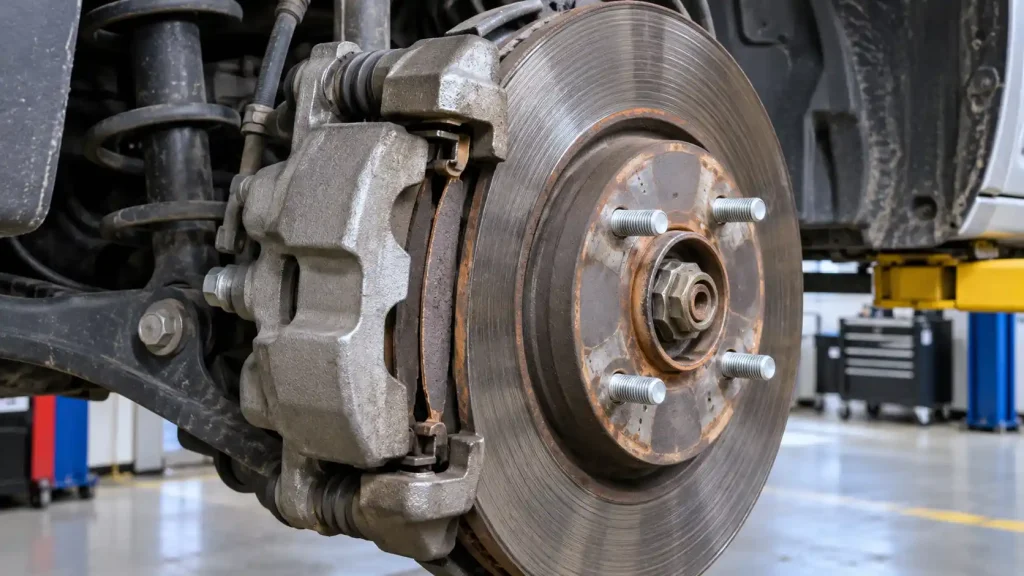
Your car’s brakes play a major role in keeping you and your passengers safe on the road. Even a small brake problem can make it harder to stop when traffic suddenly slows. Knowing the warning signs can help you fix the problem before it leads to a costly repair.
The main signs your car brake pads need replacing include a high-pitched squeal when you press the brake pedal and a harsh grinding noise from worn pads. You may also notice that your car takes longer to stop or that the steering wheel shakes when braking.
A soft brake pedal, a brake warning light, or a burning smell after braking can point to a problem that needs attention. Checking these signs early helps protect other brake parts and keeps your car safe to drive.
Most Common Signs That Your Car Brake Pads Need Replacement
1. High-Pitched Squealing When Braking
One of the first signs of worn brake pads is a high-pitched squealing sound when you press the brake pedal. Many brake pads have a small metal part called a wear indicator. When the pad becomes too thin, this part touches the brake disc and makes a squealing noise. The sound warns you that the pads may need replacing soon.
However, squealing does not always mean the pads are worn out. Dust, moisture, rust, or poor-quality brake parts can cause similar sounds. If the noise continues after a few normal stops, have your brakes checked by a mechanic. Do not ignore a repeated squeal, as the pads may be close to reaching their wear limit.
2. Grinding Noise When You Press the Brake Pedal
A grinding sound is more serious than a light squeal. It may mean that the brake pads have worn down so much that their metal backing plates are rubbing against the brake discs. This metal-to-metal contact can damage the discs and reduce braking performance.
You may hear a rough scraping sound each time you slow down. If this happens, avoid driving the car until a mechanic has checked the brakes. Continuing to use worn pads can turn a simple replacement job into a more costly repair involving new discs and other parts. A mechanic should inspect the full braking system to find the cause and check whether the discs can still be used safely.
3. Your Car Takes Longer to Stop
Your car should slow down in a steady and controlled way when you press the brake pedal. If you need to press harder than usual or notice that the car takes longer to stop, the braking system may not be working as it should.
Worn brake pads can reduce braking performance, especially when combined with overheated discs or other brake problems. However, longer stopping distances can also result from low brake fluid, faulty brake parts, poor tyres, or wet road surfaces. Do not assume that replacing the pads will fix every braking issue. A proper inspection can help identify the cause. If stopping becomes difficult, stop driving as soon as it is safe and arrange professional help.
4. The Brake Pedal Vibrates or the Steering Wheel Shakes
A shaking steering wheel or vibrating brake pedal while slowing down can point to a problem with the brakes. One possible cause is uneven brake disc surfaces. These can develop after repeated heating and cooling or due to uneven wear. The result may be a pulsing feeling through the pedal when you apply the brakes.
Worn pads may contribute to the problem, but they are not always the main cause. Loose wheel parts, damaged suspension components, and other faults can also cause vibration. A mechanic can measure the brake discs to check their thickness and surface condition. If the discs are damaged or outside the allowed limits, they may need machining where permitted or replacement along with the brake pads.
5. The Brake Warning Light Comes On
A brake warning light on your dashboard should never be ignored. Depending on the car, it may indicate low brake fluid, an issue with the parking brake, or a fault in the braking system. Some cars have a separate brake pad wear warning that turns on when the pads become too thin.
Check your owner’s manual to understand what the warning means for your model. If the red brake warning light stays on after you release the parking brake, stop somewhere safe and arrange an inspection. Do not keep driving if the pedal feels unusual or braking performance has dropped. A warning light is useful, but not every car has a sensor that tells you when the pads need replacing.
6. The Brake Pedal Feels Soft or Spongy
When the brake system is working correctly, the pedal should feel firm and respond in a predictable way. If it suddenly feels soft, spongy, or sinks farther than usual, there may be a problem with the hydraulic braking system.
Air in the brake lines, a brake fluid leak, or a failing master cylinder can cause this feeling. Worn brake pads alone do not usually cause a soft pedal, so the problem needs a wider inspection. Check whether the brake fluid level is below the recommended mark, but do not treat adding fluid as a complete fix. If the pedal sinks toward the floor or the brakes do not respond normally, stop driving and arrange professional assistance.
7. A Burning Smell After Braking
A sharp, burning smell after braking can mean that the brakes are getting too hot. This may happen when you travel down a long hill, brake hard many times, or drive with a brake part that is sticking. Overheated pads can lose some of their ability to create friction, making it harder to slow down.
If you notice smoke or a strong burning smell near a wheel, pull over in a safe place and let the brakes cool. Do not touch the wheel or brake parts, as they may be extremely hot. Avoid pouring water on hot brakes because a sudden temperature change can damage parts. If the smell returns during normal driving, have the braking system checked before using the car again.
8. The Brake Pads Look Too Thin
You can sometimes spot worn brake pads by looking through the spaces in your wheels. The pad is the friction material pressed against the brake disc when you brake. As the material wears away, the pad becomes thinner and eventually needs replacing.
Many manufacturers recommend replacing pads when the friction material reaches around 3 mm, although the exact limit depends on the vehicle and brake design. Some pads may have a different minimum thickness specified by the manufacturer. A mechanic can measure the remaining material with the right tools and compare it with the recommended limit.
Do not judge pad condition by appearance alone. The inner pad can wear faster than the outer pad, so both should be checked. If you cannot see the pads clearly, ask a mechanic to inspect them.
9. Uneven Brake Pad Wear
Brake pads should wear at a fairly similar rate across the same axle, although small differences can occur. If one pad is much thinner than the other, there may be a problem with the brake caliper, guide pins, or other parts that help the pads move correctly.
For example, a sticking caliper may keep a pad pressed against the disc even when you are not braking. This can cause extra heat, faster wear, and reduced fuel efficiency. Uneven wear may also affect how the car slows down. Replacing the worn pads without fixing the cause may lead to the same problem again. A full inspection helps ensure that the new pads work properly and wear at a normal rate.
10. Your Car Pulls to One Side When Braking
If your car moves to the left or right when you press the brakes, one side of the braking system may be working differently from the other. Uneven pad wear, a sticking caliper, or a problem with a brake hose can cause this issue. Tyre pressure differences and suspension faults can also affect the car’s direction.
This problem can make it harder to keep control, especially when stopping quickly in traffic. Do not try to correct the issue by turning the steering wheel more sharply. Have the brakes, tyres, and suspension inspected to find the cause. If the car pulls strongly or feels difficult to control, stop driving and arrange recovery rather than risking a road accident.
How Often Should You Replace Car Brake Pads?
There is no single replacement schedule that suits every car. Brake pads may last around 25,000 to 70,000 km, but some wear out sooner while others last longer. The type of pads, vehicle weight, traffic conditions, and driving habits all affect their service life.
Frequent hard braking, heavy traffic, and steep roads can increase pad wear. Gentle braking and regular inspections may help them last longer. In Dubai, high temperatures and stop-and-go traffic can add to the demands placed on the braking system, especially when driving for long periods.
Follow the service schedule in your owner’s manual and have the pads checked during routine maintenance. Replace them when they reach the manufacturer’s wear limit or when an inspection shows that they are no longer safe to use. Do not wait for a warning sound before checking their condition.
Conclusion
The most common signs that your car brake pads need replacing include squealing, grinding, longer stopping distances, pedal vibration, thin friction material, and uneven wear. A burning smell, a warning light, a soft brake pedal, or pulling to one side can point to other brake problems that need prompt attention. These signs should not be ignored, as worn or faulty brakes can put you and other road users at risk.
Check your brake pads during routine servicing and replace them when they reach the manufacturer’s wear limit. If you hear grinding, notice a major change in pedal feel, or find that your car is not stopping properly, stop driving when it is safe and arrange an inspection.
For reliable Brake Pad Replacement Dubai services, choose a qualified mechanic who can check the pads, discs, calipers, and the full braking system. Book a brake inspection today to find the problem early, protect other brake parts, and keep your car safe on Dubai roads.